
Ignoring a Hernia Could Be Dangerous: Early Signs, Causes, and Effective Treatment Options
A hernia is a common medical condition that affects millions of people worldwide. Although it may begin as a small bulge or mild discomfort, ignoring a hernia can lead to serious complications that may require emergency medical treatment. Understanding the causes, symptoms, types, and treatment options can help individuals seek timely medical care and avoid unnecessary health risks.
What Is a Hernia?
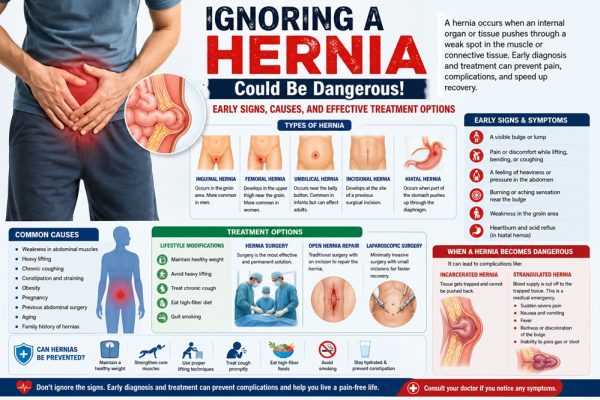
A hernia occurs when an internal organ or fatty tissue pushes through a weak spot in the surrounding muscle or connective tissue. The condition most commonly develops in the abdominal wall, although hernias can occur in other parts of the body as well.
The visible bulge associated with a hernia may become more noticeable while standing, coughing, lifting heavy objects, or straining during bowel movements. In some cases, the bulge may disappear when lying down.
Common Types of Hernia
1. Inguinal Hernia
An inguinal hernia is the most common type of hernia and occurs when tissue protrudes through a weak area in the groin. It is more common in men and can affect people of all ages.
2. Femoral Hernia
This type develops in the upper thigh near the groin and is more frequently seen in women, especially older women.
3. Umbilical Hernia
An umbilical hernia occurs near the belly button and is commonly seen in infants. However, adults can also develop this condition due to obesity, pregnancy, or increased abdominal pressure.
4. Incisional Hernia
An incisional hernia develops at the site of a previous surgical incision where the abdominal wall has weakened.
5. Hiatal Hernia
A hiatal hernia occurs when a portion of the stomach pushes upward through the diaphragm into the chest cavity. This type often causes symptoms of acid reflux and heartburn.
Causes of Hernia
Several factors can contribute to the development of a hernia, including:
- Weakness in the abdominal muscles
- Heavy lifting without proper technique
- Chronic coughing
- Persistent constipation and straining
- Obesity
- Pregnancy
- Previous abdominal surgery
- Aging-related muscle weakness
- Family history of hernias
Some individuals are born with naturally weak muscle tissues, increasing their risk of developing a hernia later in life.
Early Signs and Symptoms of Hernia
Recognizing the symptoms early can help prevent complications. Common signs include:
- A visible bulge or lump in the affected area
- Pain or discomfort while lifting, bending, or coughing
- A feeling of heaviness or pressure in the abdomen
- Burning or aching sensation near the bulge
- Weakness in the groin area
- Swelling around the testicles in men
- Heartburn and acid reflux in hiatal hernia cases
Initially, symptoms may be mild and intermittent. However, they often worsen over time if left untreated.
When Does a Hernia Become Dangerous?
A hernia should never be ignored because it can lead to serious complications, including:
Incarcerated Hernia
This occurs when the protruding tissue becomes trapped and cannot be pushed back into place. It may cause severe pain and bowel obstruction.
Strangulated Hernia
A strangulated hernia is a medical emergency. The blood supply to the trapped tissue is cut off, leading to tissue death. Symptoms may include:
- Sudden severe pain
- Nausea and vomiting
- Fever
- Redness or discoloration of the bulge
- Inability to pass gas or stool
Immediate surgical treatment is required to prevent life-threatening complications.
How Is a Hernia Diagnosed?
Doctors typically diagnose a hernia through a physical examination. In some cases, imaging tests may be recommended, such as:
- Ultrasound
- CT Scan
- MRI Scan
- Endoscopy (for hiatal hernia)
These tests help determine the size, location, and severity of the hernia.
Treatment Options for Hernia
Watchful Waiting
Small hernias with minimal symptoms may be monitored under medical supervision. However, regular follow-up is essential.
Lifestyle Modifications
Doctors may recommend:
- Maintaining a healthy weight
- Avoiding heavy lifting
- Treating chronic cough
- Eating a fiber-rich diet to prevent constipation
- Quitting smoking
While these measures may reduce symptoms, they do not cure a hernia.
Hernia Surgery
Surgery is the only definitive treatment for most hernias.
Open Hernia Repair
The surgeon makes an incision over the hernia, returns the protruding tissue to its proper position, and strengthens the weakened area with sutures or mesh.
Laparoscopic Hernia Surgery
This minimally invasive technique uses small incisions and a camera-guided approach for hernia surgery in East Delhi. Benefits include:
- Less pain
- Smaller scars
- Faster recovery
- Shorter hospital stay
Modern mesh repair techniques have significantly improved long-term success rates and reduced recurrence.
Recovery After Hernia Surgery
Recovery varies depending on the type of surgery and the patient’s overall health. Most individuals can:
- Return to light activities within a few days
- Resume work within one to two weeks
- Return to strenuous activities after medical clearance
Following the surgeon’s instructions carefully helps ensure optimal healing.
Can Hernias Be Prevented?
While not all hernias can be prevented, certain measures can reduce the risk:
- Maintain a healthy body weight
- Strengthen core muscles through regular exercise
- Use proper lifting techniques
- Avoid smoking
- Treat chronic cough promptly
- Prevent constipation through a balanced diet and adequate hydration
Final Thoughts
A hernia may seem like a minor problem at first, but delaying treatment can result in severe complications that affect quality of life and overall health. If you notice a persistent bulge, pain, or discomfort in the abdomen or groin, seeking medical evaluation is essential. Early diagnosis and timely treatment can prevent complications and help you return to normal activities with confidence.
Remember, hernias do not heal on their own. Consulting an experienced surgeon at the earliest signs can make treatment safer, easier, and more effective.